
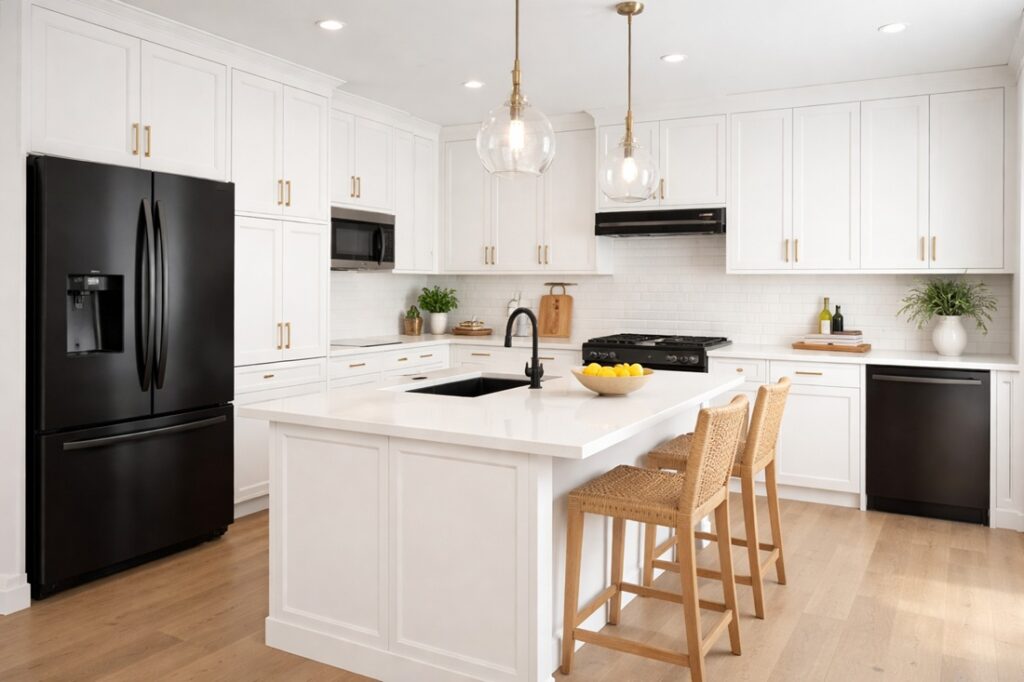
A white kitchen with black appliances can look crisp, modern, and more visually defined than a kitchen with lighter coloured appliances. It is a popular combination in modern kitchens because white cabinetry keeps the kitchen feeling light, while black appliances add contrast.
If you are wondering whether this look is right for your home, the key is not only black appliances, but also making sure the contrast feels balanced and intentional. Done well, it can look clean and timeless. If not, it can feel disconnected.
Why white kitchens and black appliances work so well
One of the main reasons this combination works is contrast. White cabinets reflect light and make the kitchen feel open, while black appliances create visual anchors that stop the room from feeling flat. This is especially useful in kitchens where the space might otherwise feel too plain.
Black appliances suit the clean lines that many people want in a modern kitchen. A black oven, cooktop, or rangehood can look sleek and understated, especially when paired with simple cabinet fronts and minimal styling.
Another advantage is that black appliances make it easier to create definition. In white kitchens, one often struggles to find contrast. Adding black introduces clear points of interest which can make important areas stand out, such as the cooking zone.
When black appliances may not be the best choice
Even though black appliances can look great, they are not right for every kitchen.
They may be less suitable in traditional kitchens, especially where cabinetry, tapware, and overall detailing lean softer or more classic. In these spaces, stainless steel, integrated appliances, or more muted finishes may fit more naturally with the design.
Black can also feel too harsh against warm cream or yellow based cabinets. If the white is a warm off white or creamy tone, a very sharp black can sometimes create a contrast that feels too strong rather than elegant. In that case, softer dark finishes may work better.
In smaller kitchens, too much black and white contrast can also feel abrupt. This does not mean black appliances cannot work. They just need more support from the rest of the room.
The same problem happens when black appliances are the only dark elements in the space. If everything else is white, pale, or warm toned, the appliances may stand out too much and feel like separate objects rather than part of the design.
What black elements can help tie the look together
Black appliances look best when black is repeated in other places. You don’t need to make everything black, but adding a few supporting items help the design feel deliberate.
Appliances
You do not need every appliance to be black. In many kitchens, just a black oven, cooktop, and rangehood are enough to establish the look. The most obvious place to introduce black is through bigger appliances such as the:
- oven
- cooktop
- rangehood
- microwave
- dishwasher front or panel
- fridge
- coffee machine
Splashback
A black or dark splashback can help connect the appliances to the rest of the kitchen. This might be a black tile, charcoal slab, smoked glass, or darker stone surface. It works well in modern kitchens where you want a bold, clean contrast.
If a full black splashback feels too heavy, you can still bring in smaller black details through tile grout, or darker veining in stone.
Benchtop
A black or charcoal benchtop creates a stronger, more dramatic look. If you want something softer, a white or light stone benchtop with black veining can connect nicely to black appliances without making the room too dark.
Other appliances
Smaller black elements can add to the look as well. These include:
- handles
- tapware
- sink
- pendant lights
- bar stools
- window frames
How to keep the look balanced
The best white kitchens with black appliances usually balance contrast with warmth. If the whole palette is only black and white, the space can start to feel hard or clinical. Adding a warmer element helps soften the result.
- Timber is one of the easiest ways to do this. Timber stools, shelving, flooring, or even a timber feature panel can make the kitchen feel more relaxed and inviting.
- Warm metals like brushed brass can also soften the contrast if used carefully.
- Texture matters too. Stone benchtops, matte finishes, subtle tile variation, or a slightly textured splashback can stop the kitchen from feeling too flat.
Conclusion
A white kitchen with black appliances can be a stylish and practical choice if you like contrast, clean lines, and a more defined overall look. It works well in modern kitchens where the cabinetry is simple and the design is balanced with a few other black elements, such as handles, tapware, lighting, or a splashback.
White keeps the kitchen feeling bright and open, while black appliances add structure and a modern edge. The key is making sure appliances connect visually with the rest of the finishes so that the look feels intentional.
If you are planning a custom kitchen and want help creating a white kitchen with black appliances, talk to our team at WA Prestige.
Get in touch for a free consultation today!