
A kitchen island bench with seating can turn the kitchen into a more social, flexible part of the home great for quick breakfasts, a spot to do homework, or an informal area to gather when entertaining.
This kind of setup can take many forms. In some kitchens, it simply means an island with an overhang for stools. In others, it means a kitchen island with built in bench seating. Some homeowners also prefer a curved kitchen island for a softer, more custom look. The best option depends on your layout, how you use the kitchen, and the style you want to create.
Also see our article on “5 Things every luxury kitchen in Perth needs right now“.
When it works well
A kitchen island with seating works best when it supports the way the kitchen is used, not just how it looks in photos. It is especially useful in homes where the kitchen is part of everyday family life and where people naturally gather such as cooking, preparing food, or entertaining.
This type of layout works well in open plan homes because the seating helps the island act as a bridge between the kitchen and living areas. It can make the space feel connected and inviting, while giving the island a stronger purpose rather than just being an extra work surface.
It often works well in kitchens that have:
- an open plan layout
- a generous island footprint
- clear walkways around the island
- a need for casual everyday seating
- a social or family focused kitchen layout
When it’s not a good idea
In smaller kitchens, trying to force seating onto an island can make the whole space feel tight and harder to use.
It may also be less practical if:
- the island is too narrow to comfortably fit both work surface and seating
- walkways are already limited
- the kitchen is mainly used for cooking and storage rather than gathering
- there is a nearby dining table that serves the same purpose
- seating would interfere with appliance doors and drawers
Standard stool vs built in bench
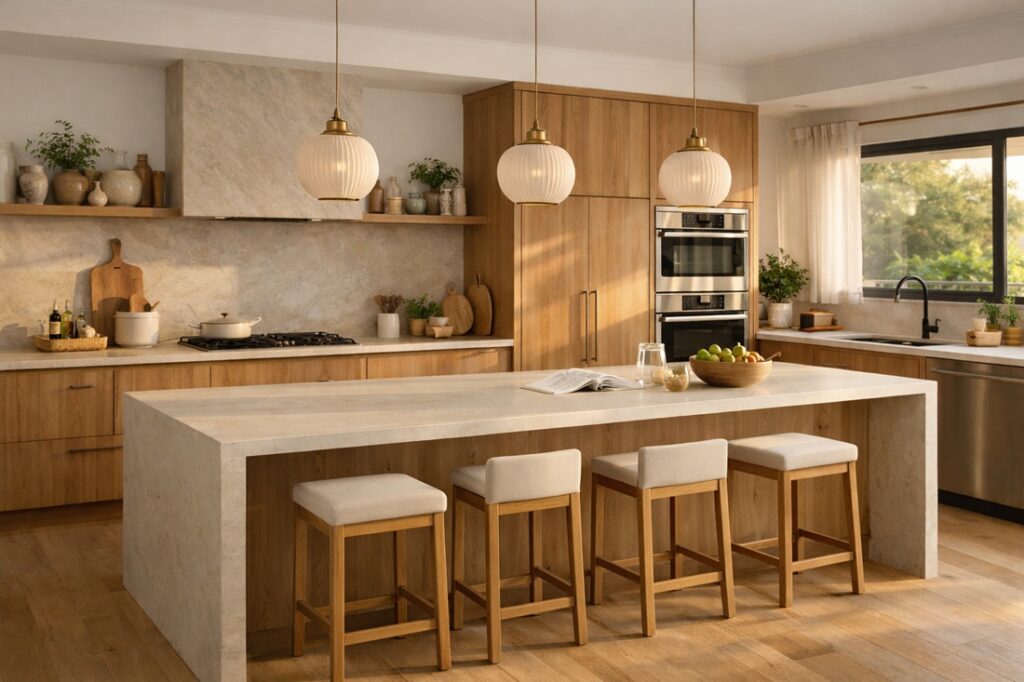
A big design decision is whether to use stools or create a kitchen island with built in bench seating.
Stool seating
Stools are the simplest and most flexible option. They are easy to update and take up less visual space. They also allow the island to remain more clearly a kitchen element rather than becoming part dining booth.
Stool seating is usually the better fit if you want:
- a cleaner, lighter look
- more flexibility in how the space is used
- easier access around the island
- a modern or minimal feel
Built in bench seating
Built in bench seating feels more custom and more integrated into the architecture of the room.
This type of seating is often a good choice if you want:
- a more permanent dining style arrangement
- a family friendly seating zone
- a feature element that connects kitchen and dining
Curved kitchen island with bench seating
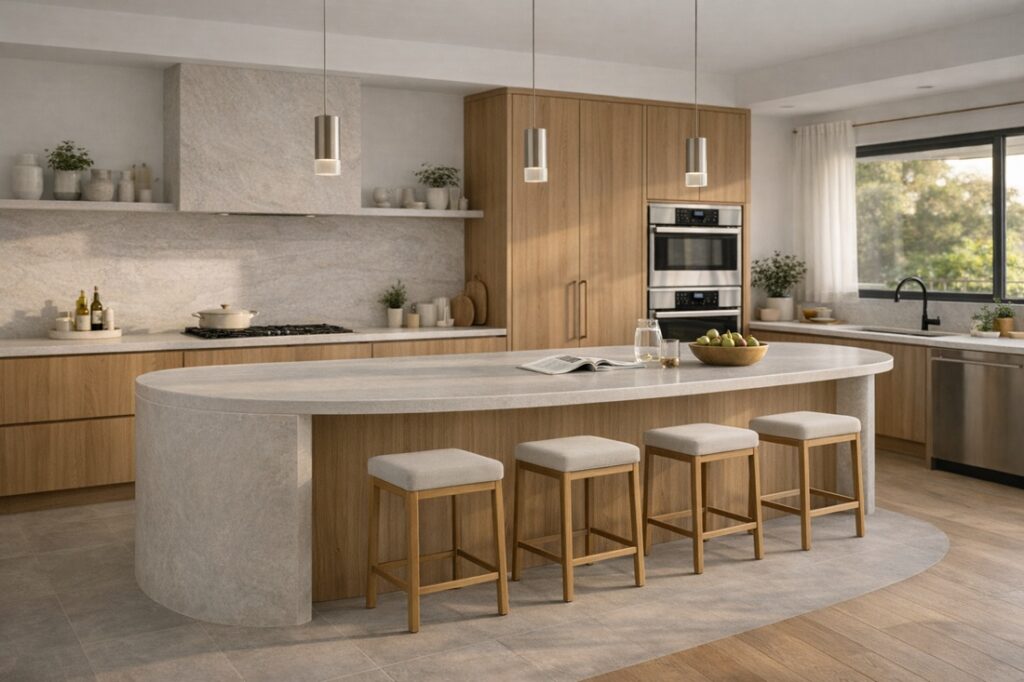
A curved kitchen island with bench seating creates a softer, more sculptural look than a standard rectangular island. This style works especially well in homes where you want the kitchen to feel more custom and design led. A curved island can also improve flow in some layouts by softening corners and creating a gentler path around the kitchen.
It often pairs well with:
- rounded joinery details
- curved stools or banquette style seating
- stone or solid surface benchtops
- timber battens or fluted panels
- softer lighting and more sculptural finishes like contemporary pendant lights
Worth to note: Curved islands are usually more complex and expensive to build than rectangular islands. They need careful planning, so the seating remains comfortable and the curve does not reduce usable bench space.
Design considerations to take into account
Keep the following in mind when trying to decide on design, style and functionality.
Space and clearance
Seating needs enough room behind it for movement. If people are seated and others still need to walk past, the kitchen can quickly feel cramped if the clearances are too tight. This becomes even more important with built in bench seating, where the seat position is fixed.
Bench overhang
If you are using stools, the benchtop needs enough overhang for legroom. Without this, the seating may look good in photos but feel awkward in real use.
Seat height
The seat height needs to suit the bench height. Standard kitchen benches usually require counter height stools rather than bar height stools. This sounds simple, but it is one of the most common mistakes in island seating design.
Comfort
If people will sit there for longer than a quick coffee, comfort matters. Back support, footrests, cushioning, and bench depth all make a difference. Built in seating can be beautiful, but it needs proper proportions to feel inviting.
Is it better than a dining table?
Not necessarily. A kitchen island with seating is best seen as complementary seating rather than a replacement for a dining table. For some families, island seating becomes the most used spot in the house. For others, it works mainly for short everyday moments rather than proper meals. The right choice depends on how you live, not just what looks good in photos.
Final thoughts
A kitchen island bench with seating can be an excellent idea if you want the kitchen to feel more social, flexible, and connected to the rest of the home. It works best when the layout has enough room for foot traffic and when the seating genuinely supports the way you use the space.
The best version kitchen island and seating combination is the one that fits your layout, feels comfortable in everyday life, adds function as well as style.
Want more practical advice on designing a kitchen island that looks good and works well? Talk to the team at WA Prestige!