
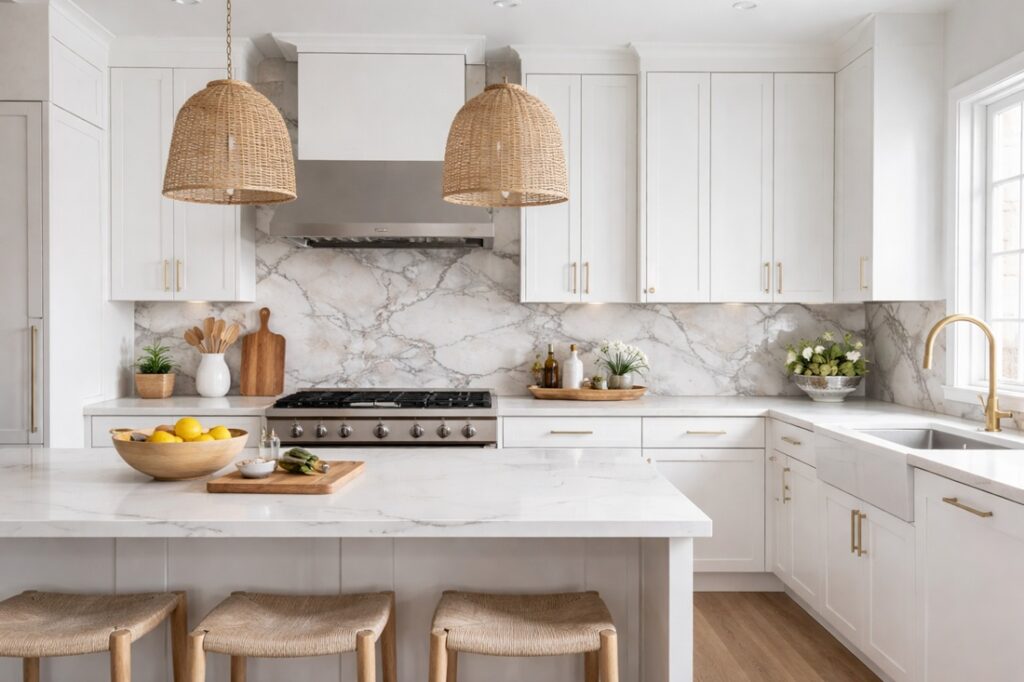
A backsplash is the wall finish behind your benchtop, usually between the counter and upper cabinets. Its role is to protect the wall from moisture, grease, and stains, but can also be a design feature which ties together cabinetry, benchtops, and hardware.
In a white kitchen, the right backsplash can keep the space looking clean and timeless, add warmth, and introduce contrast without overwhelming the cabinetry.
Why it matters more in a white kitchen
In a white kitchen, the backsplash stands out more because the cabinetry acts as a neutral base. Any subtle change in material or colour can shift the look of the room.
A glossy white tile, a soft stone slab, or a warm beige tile can all work with white cabinets, but each creates a different feel. The best choice usually comes down to the undertone of the white cabinetry, the benchtop material, the style of the kitchen and how much contrast you want.
Popular backsplash materials for a white kitchen
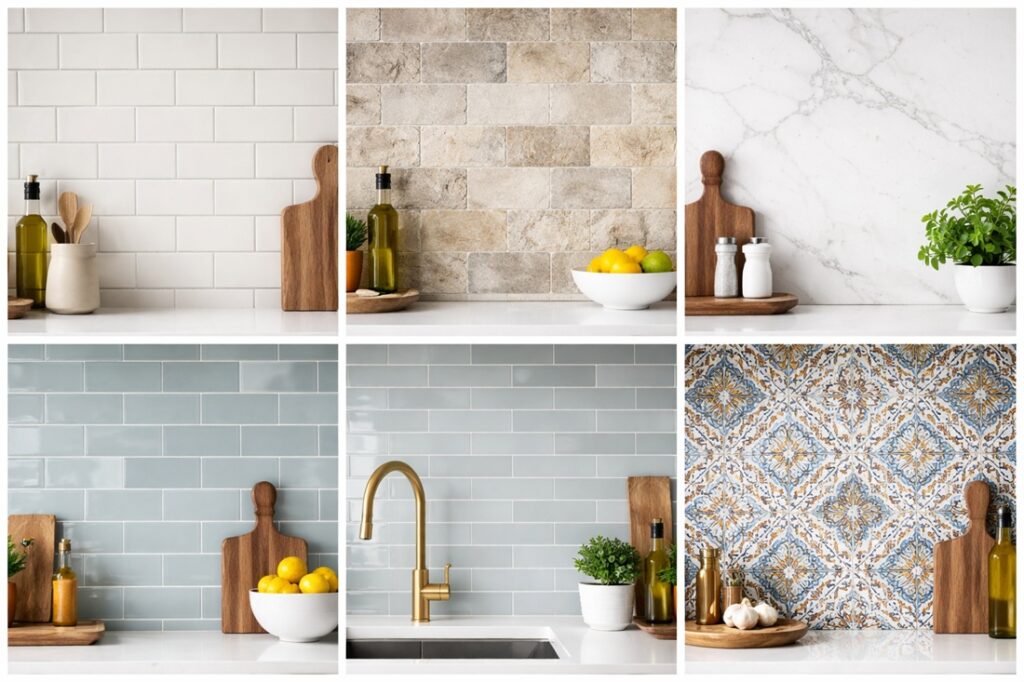
There are near endless choices of backsplash materials you can use in your kitchen, ranging from cheap to very expensive. Here are some of the most popular ones.
Ceramic or porcelain tile
Ceramic and porcelain tiles are versatile and easy to style. They come in many colours, finishes, sizes, and layouts, so they can suit anything from a classic shaker style kitchen to a modern or European design. They are a good option if you want a finish that can be subtle or decorative.
Natural stone
Natural stone gives a white kitchen a softer, more layered, and often premium look. Materials like marble, limestone, or quartzite can add movement and warmth without feeling too busy. These suits kitchens aiming for a timeless or more refined feel.
Engineered stone or slab backsplash
Using the same material for the benchtop and backsplash creates a seamless, architectural look. This is especially popular in modern kitchens because it reduces visual breaks and keeps the space even and resolved.
Glass
Glass backsplashes create a smooth, reflective finish that works well in modern kitchens. It keeps the look simple and bright, especially if you want a sleek surface without grout lines or texture.
Mosaic or feature tile
Feature tiles can add personality and become a focal point in a white kitchen. They work best when the rest of the kitchen is restrained, otherwise the space can start to feel visually busy.
How to choose the right backsplash colour for a white kitchen
White on white
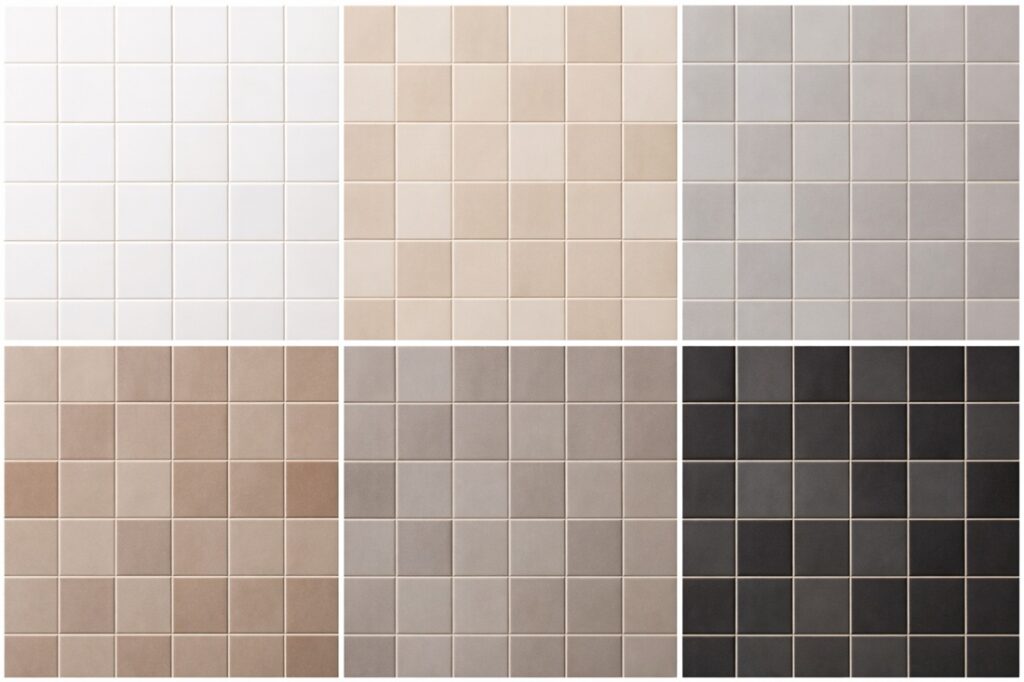
A white backsplash with white cabinetry creates a bright, clean, and timeless result. This works well if you want the kitchen to feel fresh and spacious, but the undertones need to match so the whites do not clash.
Soft neutrals
Beige, taupe, sand, and light grey can add warmth and depth without strong contrast. These colours are often a good fit in white kitchens with timber, brass, or warmer stone finishes.
Grey tones
Grey can create soft contrast in a white kitchen, especially if you want a cooler and more restrained palette. It tends to work best when it connects with other elements in the room, such as stone, flooring, or hardware.
Warm stone and earthy tones
Stone based colours like mushroom, putty, clay, and soft sand can make a white kitchen feel warmer and more natural. These tones pair especially well with timber, brushed metals, and organic style finishes.
Dark contrast colours
A darker backsplash can create a dramatic contrast against white cabinetry. Charcoal, dark green, deep grey, or black can work well in modern kitchens, especially when there are other dark accents in the space to tie the look together.
Matching the backsplash to your kitchen style
For a modern white kitchen
Modern white kitchens often suit slab backsplashes, glass, large format tiles, or simple laid tiles with minimal grout contrast. Restrained colours usually work best, such as white, soft grey, or subtle stone.
For a classic or shaker style white kitchen
Classic kitchens often suit ceramic tile, subway tile, natural stone, or softer textured finishes. White, off white, and warm neutrals are usually the easiest match.
For a coastal white kitchen
Coastal kitchens often look best with backsplashes that feel light and relaxed. White, pale neutrals, and lightly textured or handmade look tiles can work especially well.
For a more luxurious white kitchen
If you want a more premium feel, stone slabs, marble look surfaces, quartzite, or refined textured tiles can elevate the space. In these kitchens, material quality often matters more than strong colour.
Practical things to consider before choosing
A beautiful backsplash still needs to work in everyday life. Think how much texture you want, how you want grout lines displayed, and whether the backsplash should blend in or stand out.
It also helps to view samples in your actual kitchen. White cabinetry can look very different depending on light, benchtop colour, and surrounding materials.
Conclusion
Choosing a backsplash material and color for a white kitchen is about deciding how you want the kitchen to feel. White cabinets give you flexibility, but the best result usually comes from selecting a backsplash that works with the cabinet undertone, benchtop, hardware, and overall style of the space.
If you want something timeless, white, soft neutral, and stone based finishes are often the safest choices. If you want more contrast or personality, darker colors or feature tiles can work well when balanced with the rest of the kitchen.
If you are planning a custom kitchen and want custom cabinetry that works beautifully with your backsplash and benchtop selections, talk to WA Prestige. Our team can help you create a kitchen that feels cohesive, practical, and tailored to your home.