
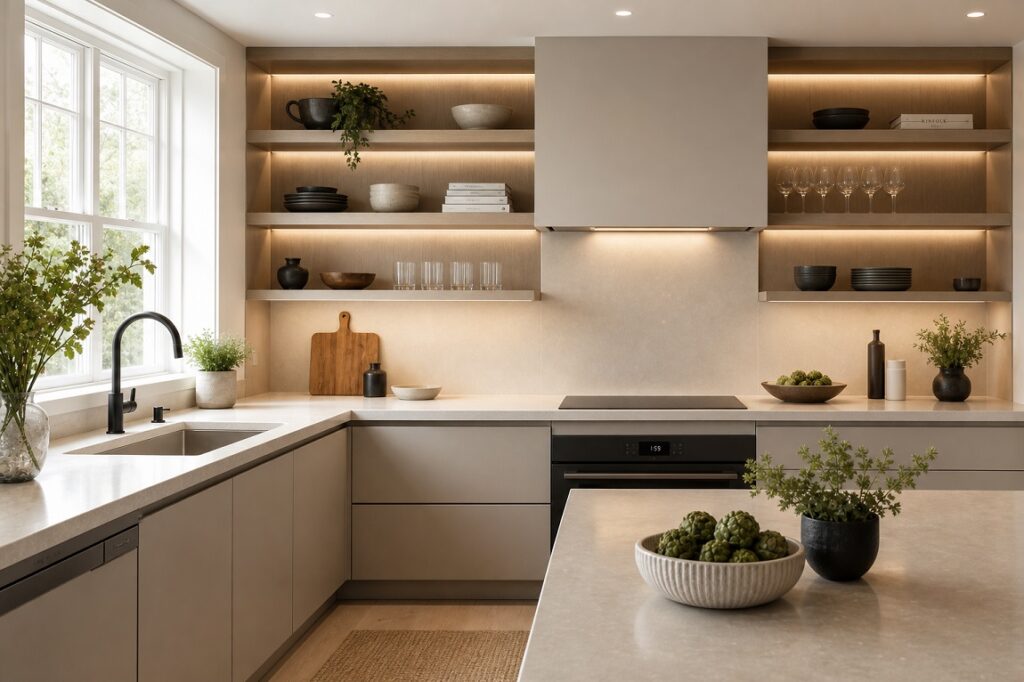
Handleless kitchens are cabinets and drawers designed without traditional knobs or pull handles. They remain a popular choice in 2026, especially in modern and open-plan homes, because their uninterrupted lines can make a kitchen feel sleek and spacious.
There are different types of handless cabinets depending on how they open, such as true handleless, profile handleless, or push-to-open cabinets. Some systems use recessed rails or channels built into the cabinet line, while others use touch-latch or push-open hardware.
When are handleless kitchens a good idea?
Handleless kitchens can be a good idea if you want a clean, contemporary look with less visual clutter. They are consistently positioned as a strong option for minimalist and open-plan spaces because the cabinetry blends together more seamlessly and creates a calmer, more architectural finish.
However, if they will fit your home depends on your priorities. For a sleek aesthetic look, they can be great. If you prefer traditional detailing, an easier grip, or the least amount of maintenance, standard handles may be the more practical choice.
You can see some of our custom kitchen cabinet examples here.
Do handleless kitchens get dirty?
Handleless kitchens can show dirt more easily in the areas you touch most. Because you are usually opening the door by the cabinet edge, front, or recessed channel rather than a separate handle, fingerprints and smudges can become more visible, particularly on high-gloss or darker finishes.
Recessed rails and grooves can also collect dust, grease, and everyday kitchen residue over time, so they may need more regular wiping than standard handled doors. That does not make handleless kitchens a bad option, but it does mean they may need a little more upkeep to keep their sharp, minimal look.
What are the cons of handleless kitchens?
One of the main cons of handleless kitchens is maintenance, as we’ve already mentioned. Fingerprints, smudges, and marks tend to be more noticeable because the cabinet front itself becomes the main touchpoint. If you choose a glossy finish, this can be even more obvious.
Another drawback is usability. Some people find recessed grips or push-to-open systems less intuitive or less comfortable than conventional handles, especially if they want a firmer grip
What are the benefits of handleless kitchens?
The biggest benefit of handleless kitchens is their appearance. They create clean horizontal and vertical lines, reduce visual clutter, and help the kitchen feel open, modern, minimalistic.
Another advantage is that handleless kitchens can make other design elements stand out more. Without hardware competing for attention, materials, finishes, lighting, and worktops often become the visual focus.
Conclusion
Handleless kitchens are a stylish and practical option in 2026, particularly for modern homes and homeowners who want a sleek, streamlined finish. Their main strengths are their clean look, reduced visual clutter, and contemporary feel, while their main drawbacks include more visible fingerprints, extra cleaning in touchpoints and grooves.
Ultimately, the best kitchen is the one that suits the way you live. If you are weighing up handleless cabinets against more traditional options, WAP Prestige can help you choose a kitchen style that best fits your space, storage needs, and overall design goals.