
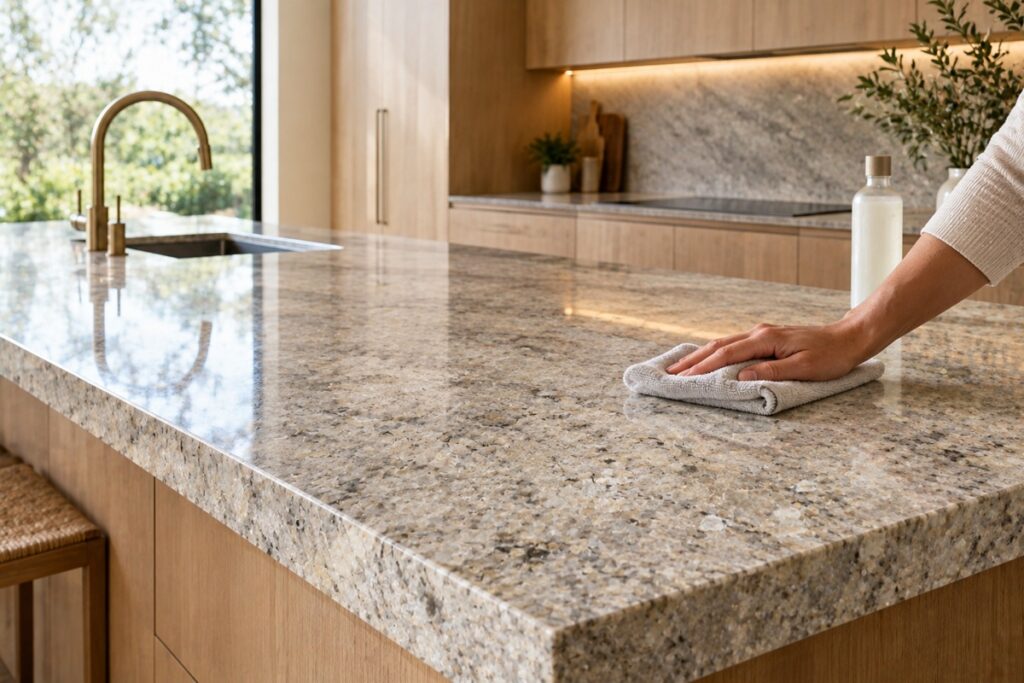
Granite benchtops need straightforward care, not an expensive collection of cleaning products. Gentle cleaning, prompt spill removal and protection from extreme heat are the foundations of a good maintenance routine.
Granite is a natural stone, rather than a manufactured mixture of stone particles and resin. Its crystalline minerals give each slab its pattern and reflective character. Let’s look closer look at how to care for your granite countertops and what to avoid.
Everyday cleaning: keep it gentle
You can use mild dishwashing liquid on granite. For everyday cleaning:
- Wipe the surface with warm water, a little mild dishwashing liquid and a soft cloth.
- Remove any remaining detergent with a clean, damp cloth.
- Dry the benchtop rather than leaving it to air-dry.
More detergent does not mean a cleaner surface. Excess soap can leave a film that makes polished granite look streaky or dull.
A dedicated granite cleaner is optional for routine cleaning. If you prefer one, choose a pH-neutral product labelled as suitable for natural stone.
What should you avoid on granite?
Avoid using the following:
- Vinegar, lemon-based sprays and acidic descalers. Granite is generally more acid-resistant than marble, but its mineral composition and surface treatments vary. Vinegar is not a reliable, universally safe cleaning choice.
- Scouring powders and abrasive pads. These can damage susceptible minerals or surface treatments.
- Oven cleaners, toilet cleaners and strong chemical cleaners. Do not use them unless your stone supplier specifically approves the product and application.
Is Windex OK on granite?
Check the exact formulation rather than relying on the brand name. Glass cleaners differ, and being ammonia-free does not automatically make a product suitable for every stone or sealer. Unless the label and your benchtop supplier confirm compatibility, use mild detergent or an approved stone cleaner instead.
Damage does not always mean the stone has been “destroyed”. It may take the form of staining, damage to a surface treatment, a chipped edge or a change in the finish.
Hot pans, pizza and everyday use
Use a trivet rather than placing hot cookware directly on granite. Heat resistance is not a guarantee against cracking from a sudden, concentrated temperature change. The same precaution applies to roasting trays and pizza stones straight from the oven.
Can you cook pizza on granite?
Preparing or rolling pizza dough on a clean granite benchtop is different from cooking on it. Do not heat the benchtop or assume an offcut is suitable for an oven or barbecue: its treatments and suitability for that use may be unknown. Use a purpose-made pizza stone or steel according to its instructions.
For general kitchen use, choose chopping boards rather than cutting directly on the stone, avoid dropping heavy cookware onto edges, and never use the benchtop as a step.
How do you get dull granite to shine again?
Start with cleaning, not polishing. Remove grease and detergent residue, rinse thoroughly and dry with a clean microfibre cloth. If the dullness disappears, the problem was surface build-up rather than lost polish.
If dull patches remain, ask your stone supplier or a stone-restoration specialist to assess the surface. Scratches, chemical damage and treatment residue require different solutions; applying more sealer or an unapproved polish may not help.
Also check the original finish. Honed granite is deliberately matt and should not be expected to shine like polished stone.
A lasting finish starts with thoughtful design
Keep granite care simple: clean gently, remove spills promptly, use trivets and follow the advice for your stone.
Planning a new kitchen? At WA Prestige we can create custom cabinetry that complements your benchtop of choice and suits the way you use your home. Contact us for a free consultation today!