
Think of your kitchen benchtop as the hub of your home. It must be tough enough for daily life, but beautiful enough to be the star of the show. Across Perth, the design landscape is changing fast. Driven by the recent national ban on traditional high silica engineered stone, we’re seeing homeowners and designers shift to alternatives that offer design flexibility and durability.
Here are four of the top benchtop materials dominating kitchen renovations across Perth and Western Australia.
Porcelain/Sintered Stone
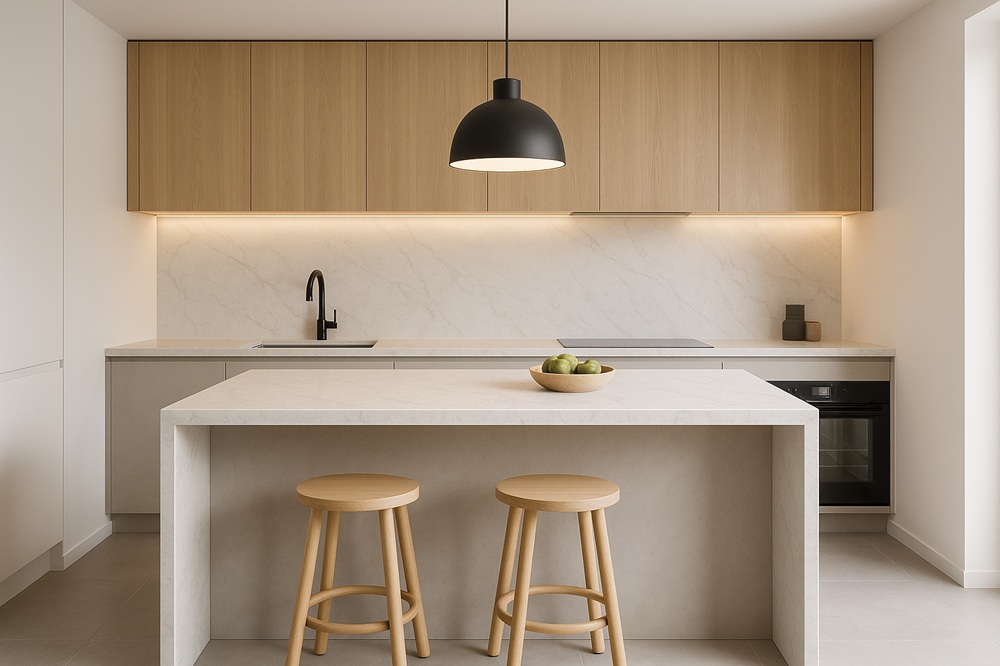
| Key trend feature | Reasons |
| Monolithic look | Used for seamless tops, splashbacks, and waterfall edges. |
| Extreme durability | Unmatched resistance to heat and stains. |
| Engineered Stone Alternative | Safe and durable, replacing high-silica options. |
Porcelain, often referred to as Sintered Stone, is a manufactured slab made from ceramic materials and minerals fused under immense pressure and heat. It’s favourite for modern kitchen design due to its compliance with new material safety regulations and its superior practical properties.
For Perth homes, porcelain’s excellent UV and heat resistance makes it ideal for kitchens that get strong sunlight or have outdoor cooking areas. Designers love its versatility. It can be manufactured in large, ultra-thin formats, allowing for dramatic, near-seamless waterfall edges and full-height splashbacks that create a cohesive, art-like focal points. It near perfectly mimics the look of marble or even concrete without the associated maintenance.
Porcelain pairs well with a minimalist, contemporary aesthetic with matte cabinetry allowing the bench top to stand out. Designers love to use dark hardware and integrated handles to amplify the sleek, modern look. The clean lines of porcelain benchtops go well with timber flooring.
Natural Granite
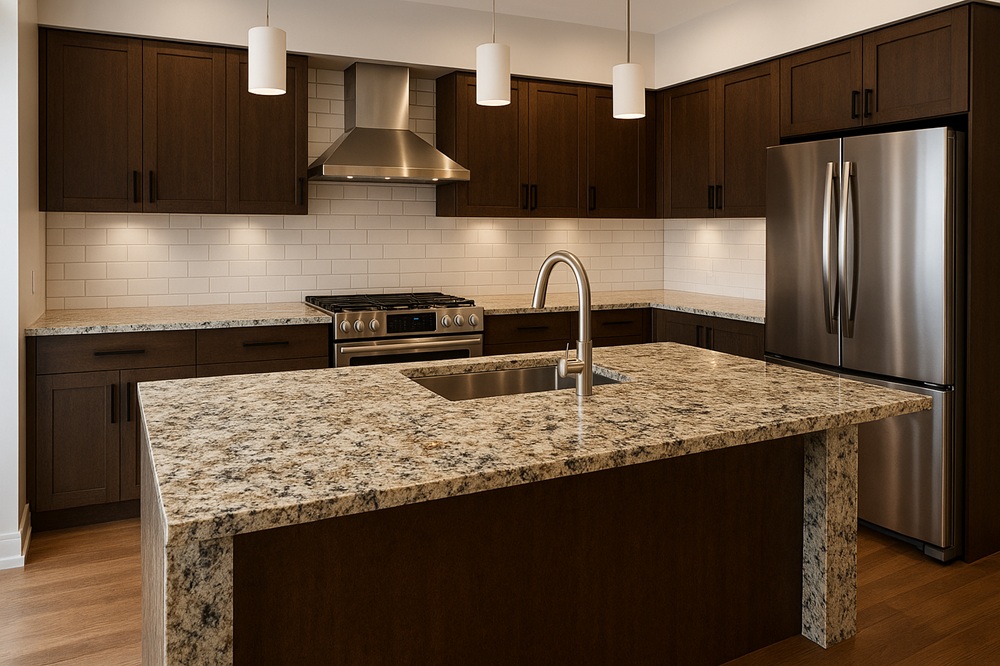
| Key trend feature | Reasons |
| Timeless durability | Known as one of the hardest and most resilient natural stones. |
| Unique character | Every slab is unique and natural. |
| Safety & value | A trusted, low-silica natural stone alternative. |
Granite, a classic kitchen material, has seen a resurgence as homeowners seek natural alternatives to manufactured products. It’s a rock known for its complex composition resulting in a sparkling, crystalline appearance with exceptional hardness.
In a post-high-silica environment, granite is a trusted, safe, and robust natural material. It is highly resistant to scratching and heat, making it the top choice for those who love to cook and value practicality. Slabs with black granites with striking gold or white veining are trending now. From a design perspective, granite is incredibly versatile, working well in both classic and contemporary kitchens.
Contemporary: A polished dark granite benchtop fits well with white or warm toned timber cabinetry. Stainless steel appliances and brushed brass tapware can add a touch of luxury.
Traditional: Softer grey or beige granites complement kitchen cabinetry painted in earthy tones like avocado green or muted blue.
Quartzite (Natural Stone)
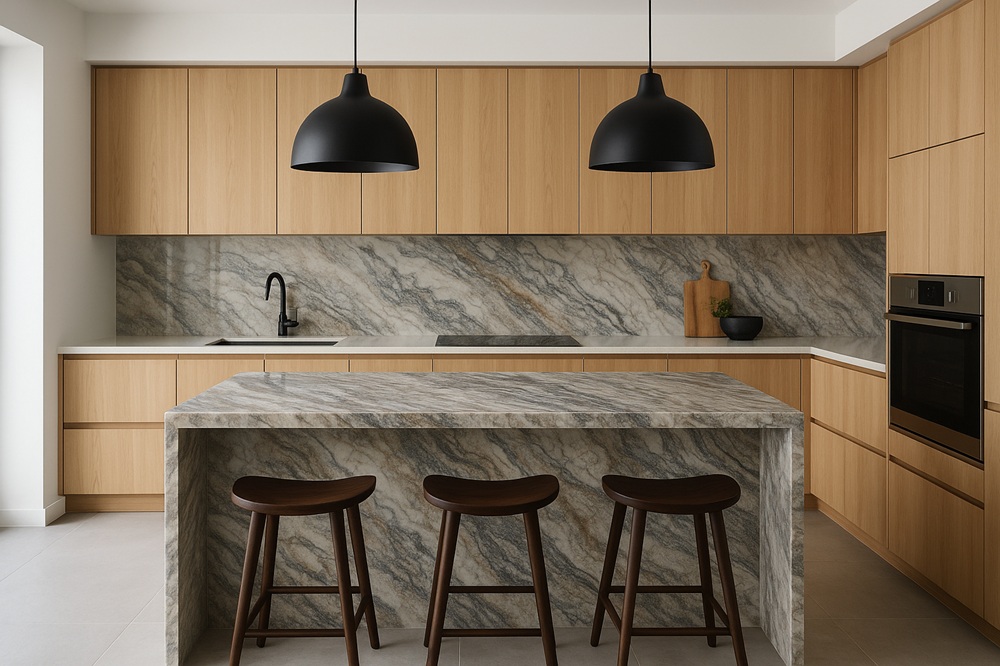
| Key trend feature | Reasons |
| Marble aesthetic with durability | Offers the look of marble but with granite’s performance. |
| Veining | Rich and dramatic veining. |
| Luxurious appeal | Favoured in luxury and custom renovations. |
Quartzite is not the same as engineered quartz. Natural quartzite is a metamorphic rock that begins as sandstone and transforms under immense heat and pressure. The result is an incredibly dense, hard stone that often looks like marble, yet with superior scratch resistance.
Quartzite is the perfect compromise for homeowners who desire the luxurious look of marble but need a surface robust enough for everyday cooking. Highly sought-after styles like cream base with warm veining and durable Dolomite are leading the charge in high end Perth kitchens.
Quartzite slabs are used as statement pieces for kitchens. With kitchen cabinetry, pale, clean colours such as crisp white or soft grey ensure the focus remains on the stone. For accents, brushed metals like gold, brass, or copper tapware, handles, and lighting add a layer of warmth and sophistication, complementing the stone’s veining.
Timber
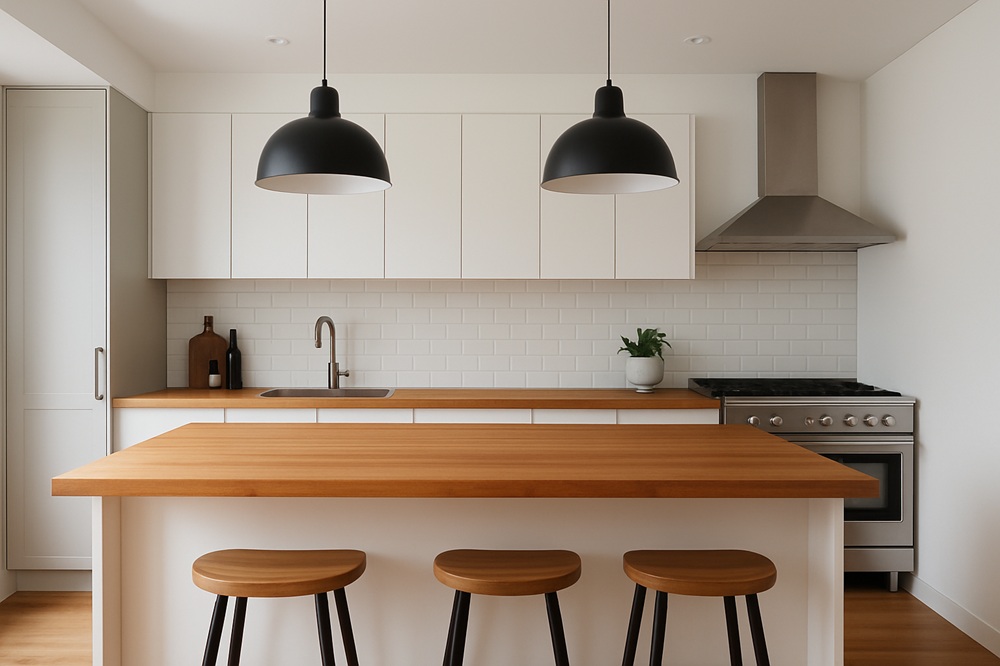
| Key trend feature | Reasons |
| Organic Design | Brings warmth into the home. |
| Mixed Materials | Used as an accent in a dual-material island or on an integrated dining area. |
| Sustainability | Demand for reclaimed and locally sourced options. |
Timber benchtops, especially solid hardwoods like Oak, Walnut, and reclaimed Jarrah offer an organic warmth that contrasts beautifully with modern surfaces. It’s not ideal for an entire primary workspace due to maintenance but is an amazing feature piece.
Timber provides the natural texture and ‘soul’ that designers are layering into kitchens. It is most used as an alternative material on an integrated dining table at the end of an island.
The natural characteristics of timber work beautifully against a cool polished surface like a porcelain benchtop or a sleek granite splashback.
Darker, rich timber cabinetry pair well with matte black or dark navy cabinetry for a luxurious, moody feel, while lighter timbers like oak beautifully complement warm white or sage green cabinetry.